
With the rapidly growing creative and digital industries, the ability to create high-quality entertainment content is a significant added value for university graduates. One of the study programs that offer such competencies is S1 Digital Content Broadcasting. This program not only focuses on traditional broadcasting, but also equips students with cross-platform content production skills, one of which is through the Drama Production course.
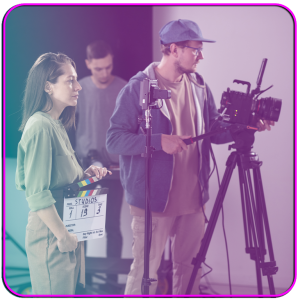
This course is one of the important components that reflect the synergy between creativity and technicality in the modern broadcasting world. Through this course, students are encouraged to understand, design, and produce drama shows that meet the needs of today’s digital broadcasting industry.
Course Description Drama Production
The Drama Production course in the S1 Digital Content Broadcasting curriculum is designed to introduce students to the entire drama program production process, from pre-production to post-production stages. This course contains material on the production of drama content using one camera or single camera. Broadly speaking, it explains about procedures, organization, and processes. Starting from planning (pre-production), production, and post-production.
Students will be equipped with theory and hands-on practice, so that their understanding is not limited to conceptual, but can also be applied in the real world of work.
Learning Output
After taking this course, S1 Digital Content Broadcasting students are expected to be able to design content production, audio visual from pre-production, production, post-production to publication.
Some tangible outcomes of this course:
Production of social-themed short films that air on the official campus YouTube channel
Screening of student drama works in campus film festivals or national competitions
Collaboration with local production houses in the creation of web series
This learning reflects a project-based learning approach that is relevant to the needs of the digital creative industry.
Relevance of Drama Production in Undergraduate Digital Content Broadcasting
Drama production plays an important role in developing the creative and technical skills of Digital Content Broadcasting undergraduate students. With the entry of streaming platforms, social media, and digital channels as the main distribution media, drama formats are increasingly consumed in the form of:
Web series
Instagram drama
Short films on TikTok and YouTube
Audio drama podcasts
Why is Drama Production Relevant?
Improve storytelling skills: Drama demands the ability to deliver a narrative message that touches the audience’s emotions.
Trains interdisciplinary teamwork: From screenwriters, cameramen, to editors must work together for a complete end result.
Adapting to digital content trends: Drama is now not only played on television, but also on media such as Netflix, YouTube, and TikTok.
As such, competency in drama production prepares graduates to adapt to the competitive digital broadcasting industry..
Basic Concept
Before producing a play, students must understand some basic concepts that are the foundation of the production process:
1. Narrative and Story Structure
Three-act structure (introduction, conflict, resolution)
Characterization and character development
Dialogue and subtext
2. Cinematic Elements
Camera work and shooting angles
Sound and background music
Set and costume arrangement according to the theme
3. Production Techniques
Pre-production: Script writing, storyboarding, location scouting, casting
Production: Shooting, actor direction, time management
Post-production: Editing, audio mixing, color grading, visual effects
These concepts are important for drama productions to run efficiently, be structured, and produce professionally competitive visual quality.
Skills Required in Drama Production
To succeed in the Drama Production course, students in the Digital Content Broadcasting undergraduate program need to possess and develop several key skills:
Technical Skills
Digital camera operation and lighting
Editing using software such as Adobe Premiere Pro or DaVinci Resolve
Use of production aids (clapper, boom mic, gimbal)
Creative Skills
Write a script with a strong point of view
Interpreting the screenplay into visual form
Designing a visual atmosphere or mood that supports the story
Managerial Skills
Time management in production
Budgeting and resource allocation
Leadership and team leading skills
It is this combination of technical, creative and managerial skills that makes the Drama Production course an integral part of the undergraduate Digital Content Broadcasting curriculum .
Conclusion
By studying and undergoing the Drama Production course, S1 Digital Content Broadcasting students will have superior competence in creating shows that are not only visually appealing, but also narratively meaningful. This learning provides a strong foundation for graduates to enter the digital broadcasting industry, film, or even become independent content creators who are able to compete on a global platform.
Join us at S1 Digital Content Broadcasting and improve your digital literacy skills for a brighter future in the media industry! Apply now and be part of a generation of innovative digital content creators.
General Requirements
- Graduates of SMA / SMK / MA / Equivalent
- Have copies of diplomas, academic transcripts, and certificates of participation in national and international championships*
- Have an Equalization Letter from the Ministry of Education, Culture, Research, and Technology of the Republic of Indonesia for applicants with overseas graduates or homeschooling. Click here for more information
Registration Steps
- Find Information about Telkom University New Student Admission
- Create an Account
- Complete Personal Data
- Complete Registration Data
- Print Participant Card
Selection Path
Active Selection Path for all D3 and S1 programs can be seen on the following page.
https://smb.telkomuniversity.ac.id/jalur-seleksi/#diploma-sarjana
Author: Ariq Rai Aryandra
Director of Information Technology Center
Tags: Drama Production